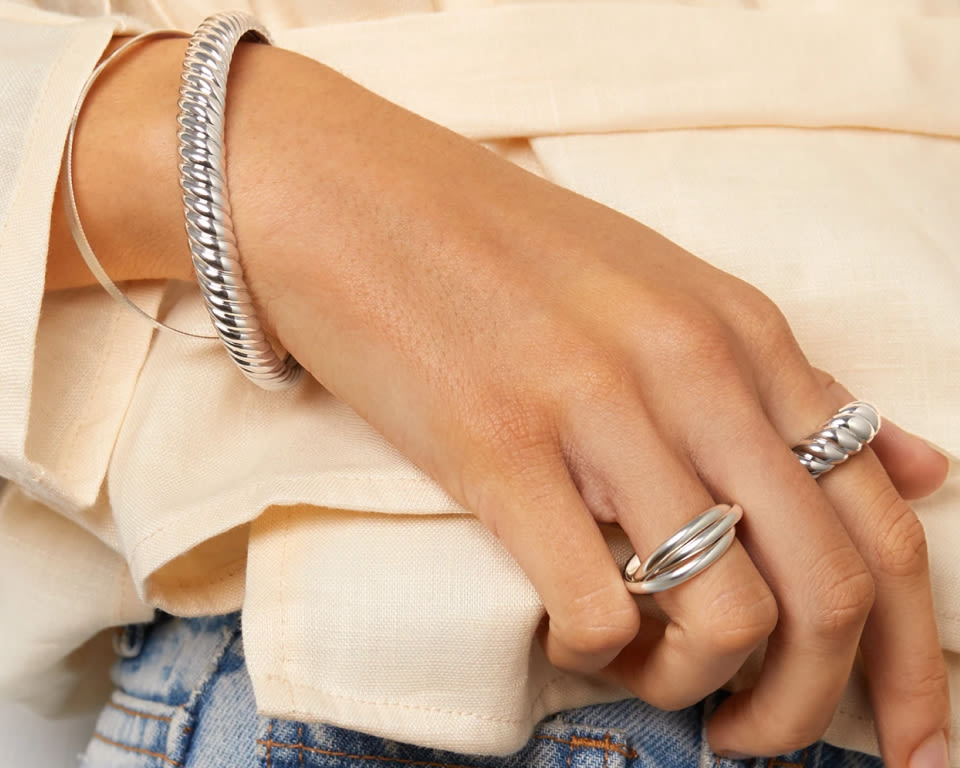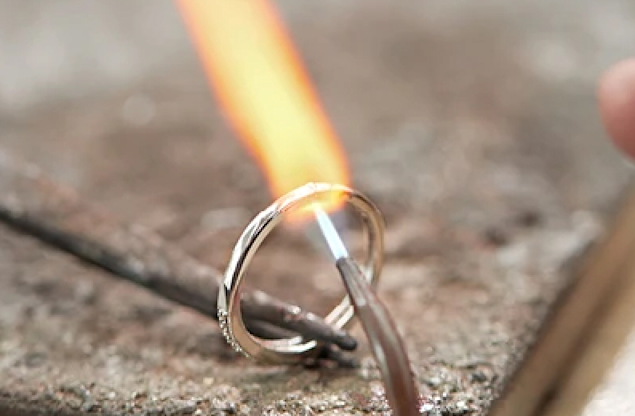
RING RESIZING
One of the most common tasks undertaken in our workshop is ring resizing or tailoring rings to perfectly fit our customers.
Member Exclusive | 25% off Selected Styles*
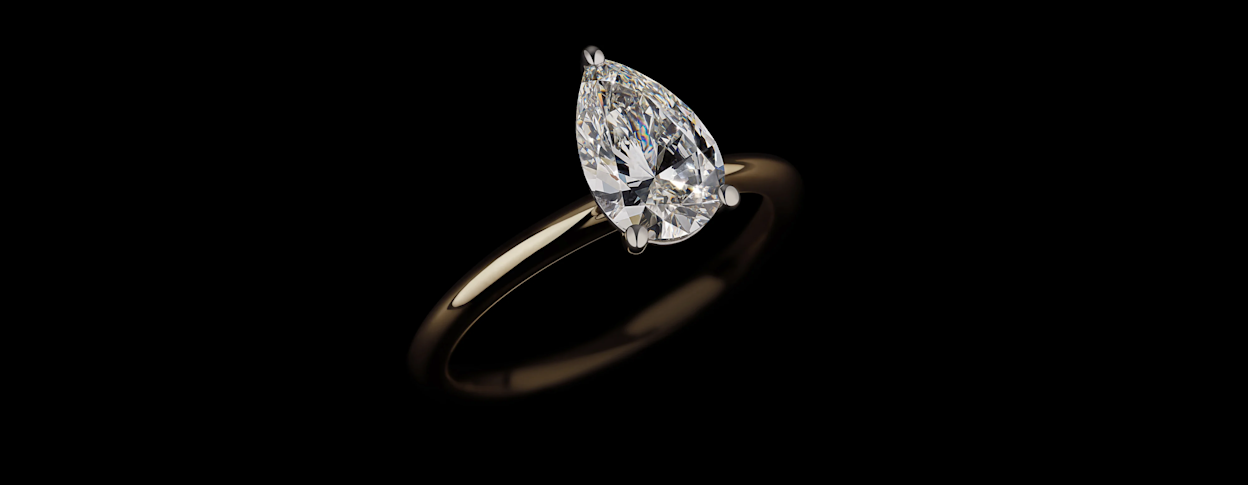
Lab grown diamonds, also called lab created diamonds or simply lab diamonds, are real diamonds. They have essentially the same chemical, physical, and optical properties and structure as mined diamonds. So are lab grown diamonds real diamonds? Yes. Based on appearance alone, generally only a qualified gemmologist using proper equipment can tell the two apart, and they share the distinctive radiance that sets diamonds apart from other gemstones.
Because of how they're grown, lab grown diamonds form with their own unique colour and clarity characteristics. Premium colour and clarity grades, and larger carat weights, come at a more accessible price point than natural diamonds of comparable quality and size. Like natural diamonds, they are most loved in white shades, and they can also be created in fancy colours.
One important distinction: lab grown diamonds should not be confused with diamond simulants such as moissanite and cubic zirconia. A simulant is made from different materials and only mimics a diamond's appearance, so it is not classified as a diamond. A lab grown diamond is.
If you're wondering how are lab grown diamonds made, they begin with a tiny diamond seed and pure carbon, grown in advanced laboratories using technology that recreates the conditions under which natural diamonds form. There are two main methods:
HPHT (High Pressure, High Temperature): mimics the intense heat and pressure of the Earth's mantle.
CVD (Chemical Vapour Deposition): builds the diamond layer by layer from a carbon-rich gas.
Both produce a real diamond made of the same mineral, pure carbon, as one formed in the Earth.
Yes on both counts. Because a lab grown diamond is chemically identical to a mined one, the answer to do lab grown diamonds test as real is that they register as diamond on a standard diamond tester, because they are diamond. And when it comes to how long do lab grown diamonds last, they share the same Mohs hardness of 10 as a natural diamond, so they resist scratches in the same way. Hardness refers to scratch resistance rather than resistance to knocks, so both are worth looking after. See our Care Guide for more.
For many buyers, this is an important consideration. People increasingly ask “are lab grown diamonds ethical”, drawn to the fact that a lab grown stone has a clear, traceable origin. For those specifically seeking conflict free diamonds, lab grown diamonds offer that reassurance by design.
On the environmental side, the lab grown diamonds environmental impact picture is nuanced. Growing diamonds is energy-intensive, though it avoids the land disturbance associated with mining.
For every lab-grown diamond, we'll plant up to 10 trees with Veritrees. Discover The Michael Hill Foundation.
Both natural and lab grown diamonds are graded to the same Four Cs: cut, colour, clarity and carat. Look for IGI certified lab grown diamonds (or GIA), and note that a reputable certificate will clearly state that the stone is laboratory grown.
There's no wrong answer, and the right stone comes down to what you love. Natural diamonds carry the romance of a gem billions of years in the making. Lab grown diamonds offer the same beauty and hardness, a traceable origin, and the freedom to choose a larger or higher-grade stone within your budget. Whichever you choose, both are beautifully suited to an engagement ring, an heirloom piece, or a piece chosen simply because you love it.
Ready to start? Explore our range of:
Or book a consultation at your nearest Michael Hill and our jewellery specialists will help you find the piece that's right for you.
Shop Laboratory-Grown Diamonds ›One of the most common tasks undertaken in our workshop is ring resizing or tailoring rings to perfectly fit our customers.
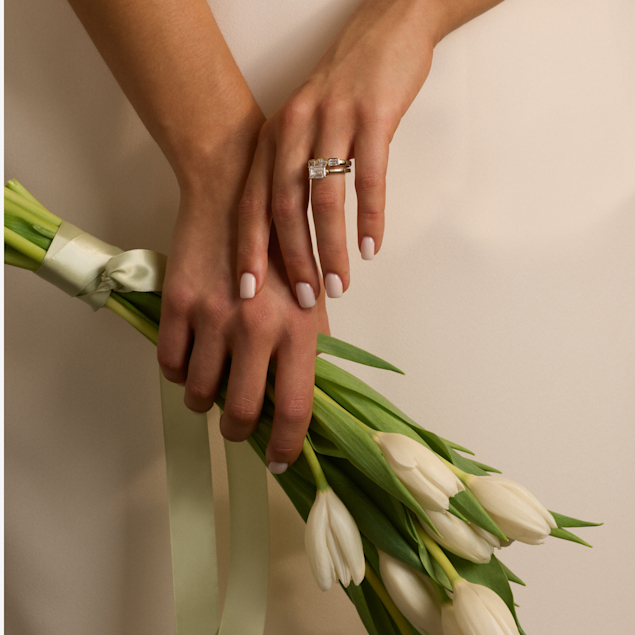
Our promise to you, providing you with the reassurance to shop with confidence and enjoy your diamond jewellery for life.
Want to let someone special know that you’re thinking of them, that you love them, or that you’ll always be there for them? A gift can speak a thousand words.